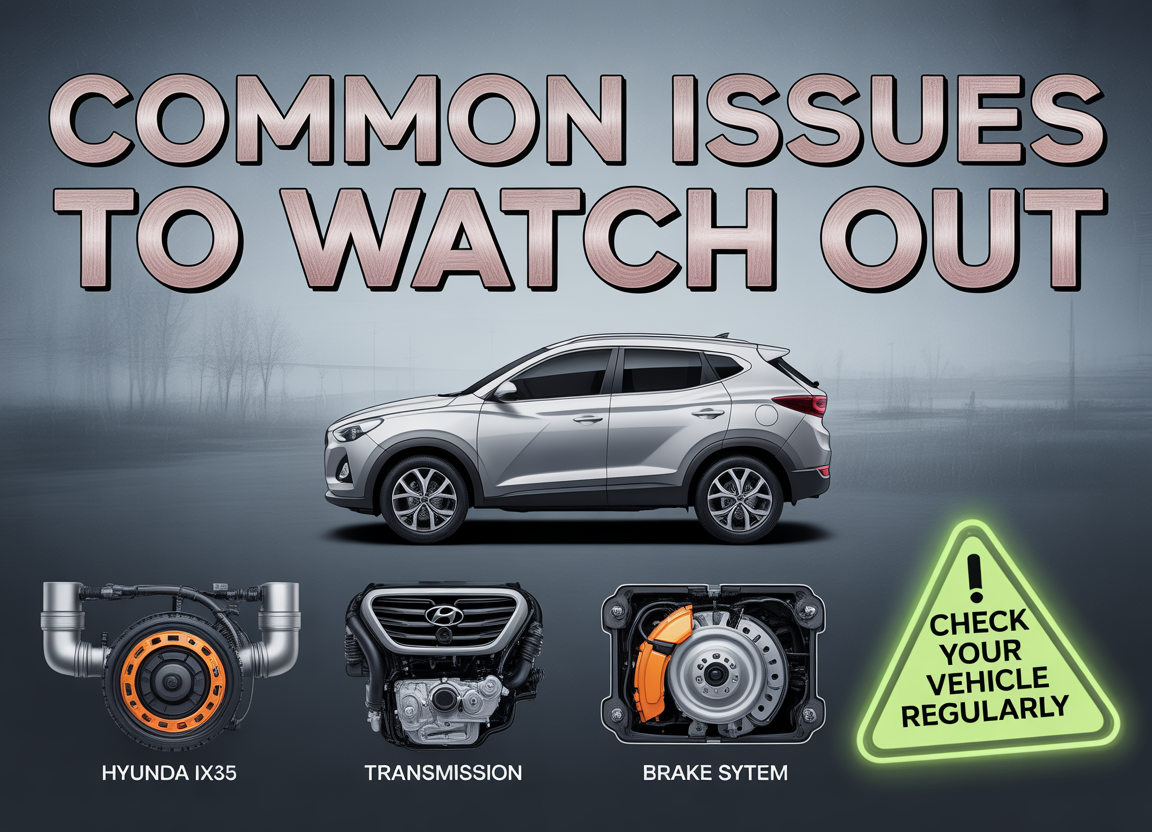
Are you familiar with the Hyundai ix35 problems? The Hyundai ix35 is a small crossover SUV made by Beijing Hyundai. Hyundai debuted the ix35 as a practical, family-friendly SUV that sits in the sweet spot between “too small to be useful” and “too big to be economical.” In many markets, the ix35 name was used for what’s essentially the second-generation Hyundai Tucson, while in China it’s closely tied to Beijing Hyundai (Hyundai’s joint-venture production).
By Gustavoblalmiras • Last updated: March 2026
This article is for educational and general information only.
It’s popular for good reasons: comfortable ride, decent equipment for the money, and generally strong value on the used market. But like any aging crossover—especially one that may have lived a hard “school run + traffic + short trips” life—there are known weak spots you’ll want to understand before you buy one, or before a small issue becomes an expensive repair.
Below is a high-value, real-world guide to the most common Hyundai ix35 issues, what symptoms look like, what typically causes them, and what you can do to avoid getting stung.
Quick buyer match: which ix35 fits your driving?
- Mostly short trips / city driving: consider petrol first. Diesels with DPF systems tend to dislike repeated short journeys.
- Regular motorway/dual carriageway driving: diesel can work well if serviced properly.
- Buying on a tight budget: prioritize service history and condition over trim level. A “cheap” ix35 with emissions or clutch issues can become expensive quickly.
At-a-glance: the biggest cost risks
| Problem area | Most common on | How serious? | What to do before you buy |
|---|---|---|---|
| DPF blockage / failed regenerations | Diesel cars with short-trip history | High | Scan for codes, confirm motorway driving habits, check warning lights |
| EGR / intake soot buildup | Diesels | Medium–High | Check drivability, scan for emissions faults, verify maintenance |
| Clutch + dual-mass flywheel wear | Manuals (especially traffic use) | High | Test for slip/shudder, check invoices for clutch/DMF replacement |
| ABS/ESC warnings / recall items | Varies by VIN/market | High (safety) | Run a VIN recall check and verify repair paperwork |
| Suspension knocks + uneven tyre wear | Higher-mileage cars / rough roads | Medium | Test drive on rough roads, inspect tyres and bushes |
| Electrical gremlins / battery drain | Older cars, weak batteries | Medium | Cold-start test, check charging, ask if it’s been jump-started |
1) Diesel DPF problems (blocked filter, failed regens, warning lights)
If you’re looking at a diesel ix35, the Diesel Particulate Filter (DPF) is one of the biggest “make or break” items—especially if the car has spent years doing short trips where the exhaust never gets hot enough to regenerate properly.
Common symptoms
- DPF warning light, engine light, or limp mode
- Loss of power, sluggish acceleration
- Cooling fans running after shutoff
- Frequent regeneration attempts (sometimes noticed as higher idle or stronger exhaust smell)
Why it happens
DPFs need periodic high-temperature runs to burn off soot. Too many short journeys can interrupt regenerations and cause soot loading to climb until the car protects itself by limiting power.
What to do
- If you mainly drive short trips, a diesel ix35 may not be the best match.
- If buying used, ask:
- Has the DPF ever been cleaned or replaced?
- Any invoices for DPF pressure sensors, temperature sensors, or forced regenerations?
- Test drive on a dual carriageway/motorway and check it pulls cleanly under load without warnings.
Prevention
If your driving allows it, a steady 20–30 minute drive at speed (legal/safe) helps the car complete regeneration cycles. Avoid illegal emissions modifications—fix the root cause instead.
2) EGR valve and intake soot buildup (diesels)
Closely linked to DPF trouble is the EGR (Exhaust Gas Recirculation) system, which can clog with soot and cause drivability issues.
Common symptoms
- Engine light / emissions warning
- Hesitation, flat spots, reduced power
- Poor fuel economy
- Rough idle
Why it happens
EGR systems route exhaust back into the intake to reduce emissions. Over time, soot and oily vapour can build up and restrict flow. If ignored, the issue can cascade into other emissions faults.
What to do
- Don’t ignore early warning lights—diagnose early.
- A proper diagnostic scan (not just a basic code reader) is worth it.
- Check service history for correct oil spec and reasonable intervals.
3) Clutch wear, soft pedal, and expensive “gearbox-out” repairs (manuals)
Manual ix35s can be perfectly fine, but clutch-related repairs are commonly reported on higher-mileage or heavy-traffic cars. On some vehicles, clutch work can be labour-intensive (often “gearbox out”), which is why costs can jump quickly.
Common symptoms
- Burning smell in traffic or on hills
- Slipping under acceleration (revs rise, speed doesn’t)
- Clutch pedal feels soft or engagement point changes
- Difficulty selecting gears
- Judder/shudder pulling away (can also involve dual-mass flywheel wear)
What to do on a test drive
- Try a higher-gear pull (e.g., 4th/5th at low speed). If revs flare without matching speed, walk away.
- Do a smooth pull-away on a slight incline (safe area). Excessive shudder is a warning.
- Ask if the clutch (and dual-mass flywheel, if applicable) has been replaced and when.
Pro tip
A “cheap” used ix35 that needs a clutch can quickly become a not-so-cheap purchase.
4) Manual gearbox issues (synchros, engagement problems)
Some owners report notchy shifting or crunchy engagement as mileage climbs. Sometimes the root cause is clutch hydraulics or linkage adjustment; other times it’s internal wear. Either way, diagnosis matters before you buy.
Common symptoms
- Notchy or crunchy shift into certain gears
- Gear selection worsens when hot
- Popping out of gear (less common, but serious)
What to check
- Pay attention to 2nd and 3rd gear changes during the test drive.
- Try shifts under gentle load and during deceleration. Crunching is a red flag.
- If the clutch pedal feels odd, investigate hydraulics as well.
5) Timing chain noise and timing-related wear (some engines)
Some ix35 engines can develop timing-chain-related noise, especially if maintenance is neglected. Timing chains don’t have a fixed replacement interval like belts, but they’re not immortal—oil quality and oil level matter.
Common symptoms
- Rattling on cold start
- Metallic “chain” noise at certain RPMs
- Rough running in more severe cases
What to do
- If you hear a consistent cold-start rattle: don’t hand-wave it away.
- Check service history closely (correct oil spec + sensible intervals).
- Ask about oil consumption and check the level.
6) Suspension knocks, creaks, and uneven tyre wear
A common used-crossover complaint is suspension noise—knocks over bumps, creaks while turning, or vague handling. Higher mileage, rough roads, or poor-quality repairs make this more likely.
Common symptoms
- Knocking over potholes/speed bumps
- Creaking when steering at low speed
- Steering feels loose or wanders
- Uneven tyre wear (inner edges are a big clue)
Typical culprits
- Drop links, bushings, top mounts, worn dampers
- Alignment out of spec (sometimes caused by worn parts)
- Poorly fitted aftermarket parts
What to do
- Inspect tyres: uneven wear hints at alignment or worn suspension.
- Test drive on rougher roads with the radio off and windows slightly open.
- Budget for a suspension refresh if the car feels “clonky” and mileage is high.
7) Electrical gremlins: battery drain, sensors, warning lights
As ix35s age, intermittent electrical issues become more likely—battery drain, random warning lights, or sensors failing. Many “mystery” problems start with low voltage from an aging battery.
Common symptoms
- Battery going flat after sitting
- Random dash warnings that come and go
- Parking sensors or reverse camera intermittently failing
- Central locking or window glitches
What to check
- If the car has been “boost started” when you arrive, be cautious.
- Check whether the battery is recent and correctly rated.
- If issues persist, a parasitic drain test can prevent endless guesswork.
8) Infotainment bugs and connectivity annoyances
This one usually won’t strand you, but it can make you hate the car: touchscreen glitches, Bluetooth dropouts, and pairing problems. Expect more complaints as systems age and phones update.
Common symptoms
- Bluetooth won’t pair or drops calls
- System freezes or reboots
- Navigation inaccuracies (on older units)
- Buttons/steering controls lag
What to do
- Test every feature you care about before buying.
- Check if official firmware updates exist for your region/trim.
- If it’s a deal-breaker, price in an aftermarket solution (where legal and appropriate).
9) Brake-related concerns and recalls (check your VIN)
Safety items deserve extra attention. Recalls can vary by country and production batch. The simple rule: always run a VIN recall check before you buy.
What you should do
- Run a recall check using your country’s official service or Hyundai’s recall portal.
- Confirm recall work has been completed with paperwork or dealer confirmation.
- During the test drive: a spongy brake pedal, odd warning lights, or inconsistent braking feel should be treated as a “stop and investigate” moment.
Example (UK): the UK government recall database lists ix35 recalls by year/VIN range, including safety recalls affecting components like the ABS control unit.
10) “Small” comfort problems that become big annoyances
Not every ix35 issue is catastrophic—some are repeat irritations that chip away at ownership satisfaction. Higher-trim models with more gadgets deserve extra time checking everything works.
- Sunroof track issues (sticking/opening problems)
- Door creaks and trim rattles
- Reverse camera/switch faults
- Air conditioning performance fading with age (especially in hot climates)
The 30-minute “before you buy” inspection plan
A) Paperwork and history (5 minutes)
- Service history: oil changes, filters, coolant, gearbox service (if applicable)
- Invoices for any DPF/EGR work (diesels)
- Invoices for clutch/DMF replacement (manuals)
- Recall completion proof (VIN-dependent)
B) Cold start + idle (5 minutes)
- Start from cold if possible (listen for rattles, rough idle, smoke)
- Confirm warning lights go out normally
- Check heater and A/C function quickly
C) Test drive (15 minutes)
- Low speed: full-lock turns for clicking/creaks; speed bumps for knocks
- Mid speed: smooth acceleration; check for flat spots or limp mode
- Higher speed: vibration at cruising speed; stability and steering straightness
- Brakes: firm but safe stops; check pull, vibration, and pedal feel
D) Post-drive walkaround (5 minutes)
- Check for fresh fluid drips underneath
- Look for strong fuel/exhaust smells
- Re-check warning lights and restart while warm
When to walk away (simple rules)
- Any safety red flag (brake/ABS/ESC warnings, overheating, severe steering issues) → walk away.
- Diesel + repeated DPF lights + short-trip history with no repair paperwork → walk away.
- Manual clutch slip or heavy shudder with no budget to fix → walk away.
- Seller can’t answer basic history questions or avoids inspections → walk away.
FAQs (schema-ready)
1) Is the Hyundai ix35 reliable?
Often yes—many owners have good experiences. Most recurring “ix35 problems” on older cars tend to be emissions wear items (diesels), clutch wear (manuals), suspension wear, and age-related electrical or infotainment quirks.
2) Should I avoid a diesel ix35?
Not automatically. A diesel can be a good fit if you do regular longer drives and it has solid service history. If your life is mostly short trips, petrol is usually the safer match to avoid DPF/EGR headaches.
3) What’s the most important thing to check before buying?
Service history plus a test drive that includes higher-speed driving. Then confirm recall status by VIN and verify any recall work has been completed.
4) Are suspension knocks a deal-breaker?
Not always, but they’re a negotiation point and a sign to inspect tyres and bushings. If the car also wanders, vibrates, or eats tyres, it can indicate deeper wear.
Source links (for your References section)
- UK GOV: Check vehicle recalls
- UK recall listing example: Hyundai iX35 (2013)
- Hyundai UK: Recalls & Service Campaigns (VIN checker)
- Hyundai Australia: Safety recalls (VIN checker)
About the author
Gustavoblalmiras publishes practical used-car buying checklists and driver guides at DriversAdvice.com. For corrections or updates to this guide, please use the site contact page.